How to Read a Window Energy Label: U-Factor, SHGC, and NFRC Ratings Explained
If you’ve ever stood in a showroom staring at a window energy label and thought, “Is this a window or a science fair project?” you are absolutely not alone. Between U-Factor, SHGC, Visible Transmittance, Air Leakage, Condensation Resistance, and the mysterious NFRC logo, choosing energy efficient replacement windows can feel like decoding a receipt from outer space. The good news? Once you know what these ratings mean, shopping for windows in Lafayette, Indiana gets a whole lot easier, and yes, it can help with saving money on energy bills too.
Table of Contents
What Do Window Energy Labels Mean for Energy Efficiency?
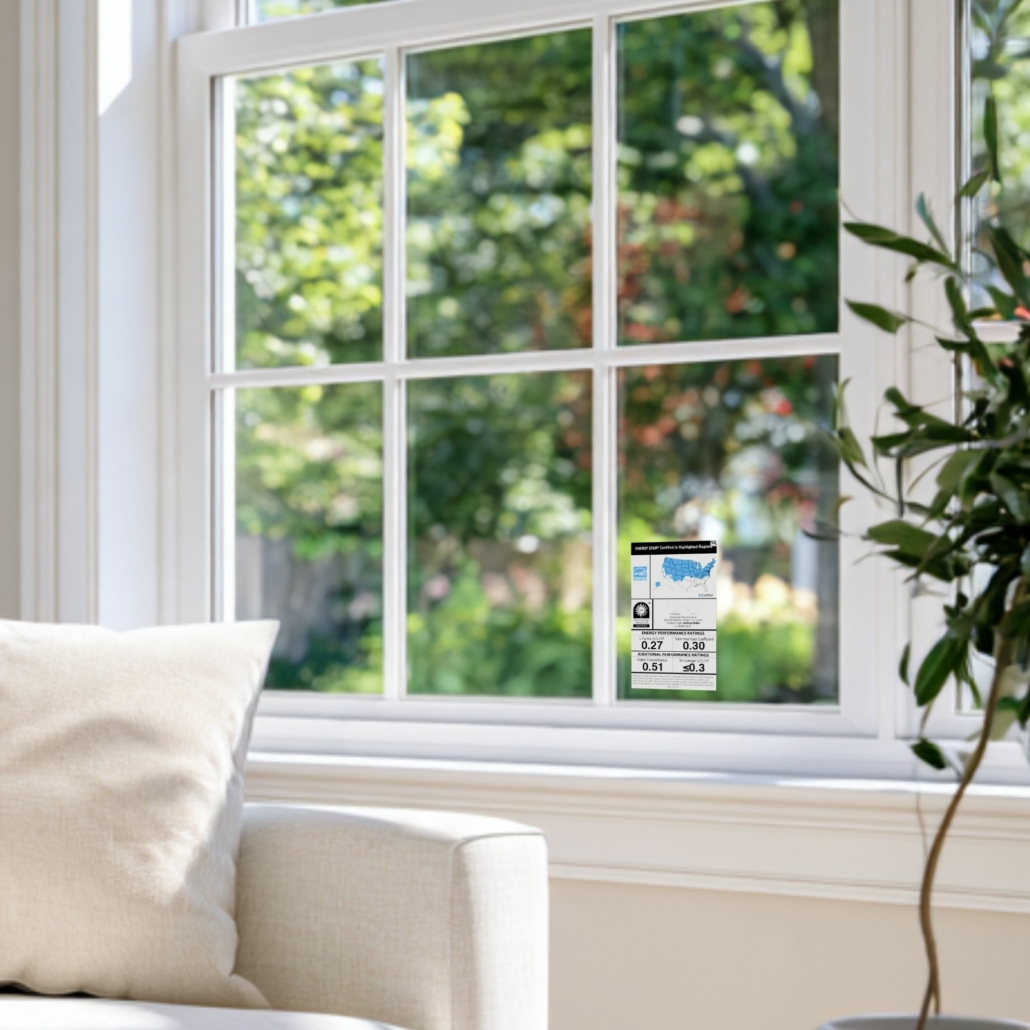
A window energy label is basically the nutrition label for your window. Instead of calories, carbs, and “wait, how many servings are in this bag?” it tells you how well the window helps control heat, sunlight, air leakage, condensation, and indoor comfort. For homeowners in Lafayette, that matters because our weather likes to sample the whole buffet: muggy summer heat, chilly winter winds, spring storms, and the occasional day where you use the furnace and the air conditioner within 24 hours.
The most common label you’ll see is from the National Fenestration Rating Council, usually shortened to NFRC. The NFRC is an independent organization that rates windows, doors, and skylights so homeowners can compare products using the same testing standards. If one window has an NFRC-certified U-Factor of 0.27 and another has 0.32, you’re comparing apples to apples instead of apples to “trust me, this one is really good.”
What Is U-Factor on Replacement Windows?
U-Factor measures how well a window keeps heat from escaping. The lower the U-Factor, the better the window insulates. In simple terms, a lower number means your heated indoor air is less likely to take a winter vacation through the glass. For Lafayette homeowners, where January can bring serious cold and wind, U-Factor is one of the most important energy efficiency numbers on the label.
Think of U-Factor like the opposite of a cozy blanket score. If the number is lower, the window is doing a better job holding warmth inside during winter. That can make rooms feel less drafty, help your HVAC system work less, and support saving money on energy bills over time. This is especially helpful in older Lafayette homes near downtown, Columbian Park, Highland Park, or out toward rural Tippecanoe County where older window openings may not be doing your comfort any favors.
What Is SHGC and Why Does It Matter in Lafayette, Indiana?
SHGC stands for Solar Heat Gain Coefficient. Fancy name, simple idea: it measures how much heat from the sun passes through the window. The lower the SHGC, the less solar heat enters your home. In the summer, that can help keep your living room from turning into a greenhouse. In the winter, a little solar warmth can be nice, but too much summer heat is usually the bigger comfort problem for many Lafayette-area homes.
If you have big south-facing or west-facing windows, SHGC is worth paying attention to. Those sunny afternoon rooms can get toasty fast, especially in July and August. Choosing replacement windows with the right SHGC can help reduce heat buildup, improve comfort, and make your air conditioner breathe a tiny sigh of relief. Not literally, of course. If your AC sighs, please call an HVAC person.
What Are the Other NFRC Ratings on Window Labels?
Besides U-Factor and SHGC, NFRC labels may list Visible Transmittance, Air Leakage, and Condensation Resistance. Visible Transmittance tells you how much natural light gets through the glass. Air Leakage measures how much air passes through the window assembly. Condensation Resistance estimates how well the product resists moisture buildup on the inside surface of the glass.
Here’s the quick cheat sheet before we go deeper: lower U-Factor is usually better for insulation, lower SHGC helps block unwanted solar heat, lower Air Leakage means fewer drafts, higher Visible Transmittance means more daylight, and higher Condensation Resistance can help reduce moisture issues on cold days. That’s the “put it on a sticky note” version of reading a window energy label.

How Do You Use a Window Energy Label to Compare Replacement Windows?
When you’re comparing replacement windows near you, start by looking at the NFRC label instead of relying only on phrases like “premium,” “high performance,” or “super deluxe comfort wizard glass.” Marketing language can be helpful, but the label gives you standardized numbers. That makes it easier to compare products side by side and make a confident decision.
The National Fenestration Rating Council explains that its ratings are designed to help consumers compare energy performance across products. That matters because window performance depends on the whole unit, not just the glass. The frame, spacers, glass package, coatings, gas fills, and installation quality all play a role.
For Lafayette, Indiana homeowners, a good energy label conversation usually starts with these questions: Is the home drafty in winter? Do certain rooms overheat in summer? Are utility bills creeping up? Are the existing windows single-pane, older double-pane, or damaged? Once you know what problem you’re trying to solve, the NFRC numbers become much more useful.
Which Window Rating Is Most Important for Saving Money on Energy Bills?
There isn’t one magic number that does everything, but U-Factor and SHGC usually get the most attention because they directly relate to heat transfer. U-Factor helps with insulation. SHGC helps control solar heat. Air Leakage is also important because drafts can make even a decent glass package feel uncomfortable if air is sneaking around the sash or frame.
ENERGY STAR reports that replacing single-pane windows with ENERGY STAR certified windows can save homeowners an average of $101 to $583 per year, depending on the home and region. That’s not pocket lint. For many households, better energy efficiency can help offset the cost of replacement over time while making the home more comfortable day to day.
Of course, savings vary. Your home’s age, insulation, HVAC system, window orientation, shade trees, thermostat habits, and installation quality all matter. If someone promises the same exact savings for every home, politely raise an eyebrow. Maybe both eyebrows.
How Should Lafayette Homeowners Balance U-Factor and SHGC?
In Lafayette, we get cold winters and humid summers, so balance matters. A window with excellent insulation but poor solar control may still make a west-facing room uncomfortable. A window that blocks too much light may feel gloomy in a shaded room. The goal is not just buying the lowest number on the shelf. The goal is choosing windows that fit your home, your comfort goals, and your budget.
This is where working with a local window replacement team helps. Window Depot USA of Lafayette understands the climate in Lafayette, Indiana and can help explain which ratings make sense for your specific home. A ranch home near West Lafayette with full afternoon sun may need a slightly different solution than a historic two-story near downtown Lafayette with older openings and shade trees.
How Often Should You Replace Your Windows in Lafayette, Indiana?
Most homeowners replace windows when comfort problems, energy concerns, maintenance issues, or visible damage become too annoying to ignore. Not exactly scientific, but very human. Many quality windows last around 15 to 30 years, depending on materials, installation, weather exposure, and upkeep. In Lafayette, our freeze-thaw cycles, rain, wind, snow, and summer humidity can all contribute to wear over time.
If your current windows are older, difficult to open, foggy between panes, drafty, or visibly damaged, it may be time to look at replacement windows. The energy label then helps you compare modern products and understand what kind of performance upgrade you’re getting. Older single-pane or failing double-pane windows typically can’t compete with today’s insulated glass packages.
Another sign is uneven room comfort. If the couch by the window becomes a winter penalty box, or your upstairs bedrooms get brutally hot in August, poor window performance may be part of the issue. A better-rated window can help stabilize room temperatures and reduce the burden on your heating and cooling system.
What Are Signs You Need New Windows in Lafayette?
- Drafts around the frame or sash, especially on windy winter days.
- Condensation or fog trapped between glass panes.
- Windows that stick, slam shut, or refuse to lock properly.
- Soft, rotting, cracked, or warped frames.
- Noticeably higher heating or cooling bills without another clear cause.
- Rooms that feel too cold in winter or too hot in summer.
- Excess outside noise sneaking into your home.
- Peeling paint, water stains, or moisture damage around the opening.
If you checked more than a couple of those boxes, your home may be trying to tell you something. It is not being dramatic. Well, maybe a little. But drafty, damaged, or outdated windows can affect comfort, efficiency, and curb appeal, so it’s worth having a local pro take a look.
Triple Pane Windows Benefits for Lafayette, Indiana Homes
Triple pane windows are designed with three panes of glass instead of two, creating extra insulating space inside the unit. That added layer can improve energy efficiency, reduce outside noise, and help rooms feel more comfortable during both winter cold and summer heat. For Lafayette homeowners dealing with chilly winds, busy streets, barking dogs, or the occasional early morning mower, that extra performance can be very welcome.
When you compare labels, many triple pane windows show lower U-Factor numbers than standard double-pane options. That means they can do a better job slowing heat transfer. With the right glass coatings and gas fills, they can also help manage SHGC so your home gets comfort without feeling sealed inside a toaster oven.
Are triple pane windows right for every home? Not always. They can cost more up front, and the best choice depends on your budget, home design, comfort goals, and how long you plan to stay. But if you’re focused on premium comfort, energy efficiency, and noise reduction, they’re absolutely worth discussing with Window Depot USA of Lafayette.
Do Triple Pane Windows Help With Noise Near You?
They can. While windows are not magic soundproof force fields, upgraded glass packages can help reduce everyday outdoor noise. That’s helpful if you live near a busy road, around Purdue-area traffic, close to schools, or in a lively neighborhood where everyone’s leaf blower apparently has a personal trainer.
Noise reduction depends on the full window system and installation, not just the number of panes. Proper fit, sealing, frame quality, and glass thickness all matter. That’s another reason professional installation is so important when you invest in new windows.
Made in the USA Windows: Why That Matters Locally
Choosing Made in the USA windows can matter for several reasons: quality control, supply chain reliability, supporting American manufacturing, and better access to product support. For local homeowners in Lafayette, Indiana, that can translate into a smoother project experience and more confidence in the products going into your home.
There is also something nice about improving your home with products built closer to home. We all know the frustration of waiting forever for parts, updates, shipping, or warranty answers. When you choose a company focused on dependable products and local service, the process can feel less like a mystery and more like an actual plan.
Window Depot USA of Lafayette is locally owned, which means you get the advantage of a local team that understands Lafayette-area homes, plus access to strong window products designed for real-world performance. Local matters when you need someone to answer questions, measure correctly, install carefully, and stand behind the work.
Why Does Local Window Replacement Matter in Lafayette?
Local window replacement is not just about convenience. It’s about knowing how homes in the area are built and how our weather behaves. A contractor who works here regularly understands the difference between an older home near downtown, a newer subdivision home, a farmhouse outside town, and a West Lafayette property with large sun-facing glass.
That local experience helps with product recommendations, installation details, scheduling, and long-term satisfaction. The best rating label in the world won’t help much if the window is installed poorly. Proper installation protects energy efficiency, comfort, water resistance, and warranty coverage.
Things to Look for When Choosing Where to Buy New Windows Near You
Buying replacement windows is not something most people do for fun on a random Tuesday. It’s a major home improvement decision, and picking the right company matters just as much as picking the right product. When searching for new windows near you, look for a company that takes time to explain the energy label, answer questions, and recommend options based on your actual home.
A trustworthy window company should not pressure you with confusing ratings or one-day-only deals that somehow expire every day. You deserve clear information, honest comparisons, and a written estimate. If a salesperson says, “Don’t worry about the U-Factor,” that’s your cue to ask more questions.
Here are a few things to look for:
- NFRC-rated products: You want standardized performance data, not vague claims.
- Local experience: Lafayette weather has its own personality, and your window team should understand it.
- Professional installation: Even great products need proper installation to perform well.
- Clear warranties: Ask what is covered, for how long, and who handles service.
- Energy efficiency guidance: The company should explain U-Factor, SHGC, and other ratings in normal human language.
- Flexible options: Your budget, home style, and goals should guide the recommendation.
Quick homeowner tip: bring photos, rough measurements, and your biggest comfort complaints to your consultation. Saying “this room is freezing” is useful. Saying “this room is freezing, faces west, and has two giant old double-hungs” is even better.
What Makes Window Depot USA of Lafayette Different?
Window Depot USA of Lafayette combines local ownership with access to high-performing replacement window options. That means homeowners get a team near you that understands Lafayette, Indiana homes, not a faraway call center reading from a script and hoping “Tippecanoe” is pronounced correctly.
The team can help you compare U-Factor, SHGC, NFRC ratings, glass options, frame styles, and installation details without making the process feel like a graduate-level engineering class. You’ll get guidance based on your goals, whether that’s improving curb appeal, reducing drafts, upgrading to triple pane, increasing energy efficiency, or saving money on energy bills.
Another important difference is fit. Your home is not a spreadsheet, and replacement windows should not be selected by numbers alone. A good local consultation considers the window opening, orientation, age of the home, exterior style, interior comfort issues, and the way you actually live in the space. For example, a sunny kitchen may need different glass performance than a shaded bedroom.
Can Better Replacement Windows Increase Comfort Year-Round?
Yes, and comfort is one of the biggest reasons homeowners decide to replace windows. Energy savings are great, but so is being able to sit near the window in January without wearing a hoodie, blanket, and the emotional expression of defeat.
Better-rated replacement windows can reduce drafts, slow heat transfer, help manage solar heat, and improve indoor comfort. In Lafayette, where winter and summer both show up with opinions, that year-round performance is a big deal.
How Does Installation Affect Energy Efficiency?
Installation can make or break performance. A window with excellent NFRC ratings can underperform if it is measured incorrectly, poorly sealed, or installed out of square. Small gaps can lead to drafts, water issues, and reduced energy efficiency.
Professional installation helps ensure the window fits the opening, operates correctly, seals properly, and performs as intended. That’s why choosing a local window replacement company with experience is so important.
FAQ: Window Energy Labels and Replacement Windows in Lafayette, Indiana
What is the most important number on a window energy label?
Answer: U-Factor is often the most important number for Lafayette homeowners because it measures insulation. Lower U-Factor means the window does a better job reducing heat transfer, which helps during cold Indiana winters.
What does SHGC mean on replacement windows?
Answer: SHGC stands for Solar Heat Gain Coefficient. It tells you how much solar heat comes through the glass. A lower SHGC helps block summer heat, especially in sunny rooms.
Are ENERGY STAR and NFRC ratings the same thing?
Answer: No. NFRC provides standardized performance ratings for windows, while ENERGY STAR uses performance criteria to identify products that meet energy efficiency guidelines for different climate zones.
How often should I replace windows in Lafayette, Indiana?
Answer: Many windows last 15 to 30 years, but replacement may be needed sooner if you notice drafts, foggy glass, damaged frames, sticking sashes, or rising energy bills.
Do triple pane windows make sense in Lafayette?
Answer: Yes, they can. Triple pane windows may improve insulation, comfort, and noise reduction, which can be especially helpful during cold winters and in homes near busy roads.
Can replacement windows really help with saving money on energy bills?
Answer: Yes, efficient replacement windows can reduce heat loss, limit unwanted solar heat, and lower HVAC workload. Actual savings depend on your home, current windows, and installation quality.
What U-Factor should I look for near me?
Answer: In Lafayette, a lower U-Factor is generally better because it improves insulation. The best target depends on your home, budget, and whether you choose double-pane or triple-pane options.
Should I choose the lowest SHGC possible?
Answer: Not always. A lower SHGC helps block heat, but the right number depends on window direction, shade, room use, and how much natural warmth or daylight you want.
Ready to Read Labels Like a Pro and Save Money on Energy Bills?
Reading a window energy label does not have to be intimidating. Once you understand U-Factor, SHGC, NFRC ratings, Air Leakage, Visible Transmittance, and Condensation Resistance, you can compare replacement windows with confidence instead of guessing. And if you forget half the acronyms five minutes from now, don’t worry. That’s what local experts are for.
For homeowners in Lafayette, Indiana, the right windows can improve comfort, boost energy efficiency, reduce drafts, help manage sunlight, and support saving money on energy bills over time. Whether you’re replacing a few problem windows or planning a full-home upgrade, Window Depot USA of Lafayette can help you choose products that make sense for your home, your budget, and our local climate.
Contact Window Depot USA of Lafayette today for your free quote.